Frequently Asked Questions
Firebird edition (2005)
Why did you make the second book ahout Elana so different from
the first?
I'd had the story in mind for many years, so I started writing it
as soon as I finished
Enchantress, and since it required interstellar
explorers with the same policy as the Service, it couldn't be about a
separate organization. I have since been sorry that I used the same heroine;
another agent of the Service could just as easily have been the protagonist.
None of the other characters from
Enchantress appear in it.
What age range did you have in mind when you wrote
The Far Side of Evil?
I intended it for high school age. In the era in which it was first published
there was no such thing as a Young Adult category; everything not published as adult
fiction was issued as a "children's book." Unfortunately, to my great dismay the
publisher labeled it "age 10-14" on the jacket because that was the age range that
sold best, and because
Enchantress from the Stars, which was popular, was
suitable for that age (though it too was originally meant for teenagers). I have always
regretted connecting
The Far Side of Evil so specifically to
Enchantress.
But when I wrote it,
Enchantress hadn't yet been published and I didn't foresee
that my books would be given to preadolescent children.
Why do you make such a point of saying that The Far Side of
Evil is not suitable for as young an audience as Enchantress from the
Stars? Some children have liked it at 10 or 11.
Some children even like adult science fiction at 10 or 11. Young readers
unusually mature for their age are not turned away by statements that they
are too young for a book. However,
Enchantress is often given to
average 5th and 6th graders, who enjoy the story even when they don't
understand as much of it as older readers do. These children (and teachers
who haven't read
Far Side) are apt to assume that the second novel
about Elana will have similar appeal, when it is actually a very different, and
much darker, story that only very exceptional readers below high school age
find enjoyable. Children may find its subject matter--torture, imminent nuclear
war--disturbing, or they may feel the discussions it contains are too
complex to be interesting. No author wants a book to be called "not as good
as the first one" simply because it was given to readers not apt to like it
as well as its predecessor.
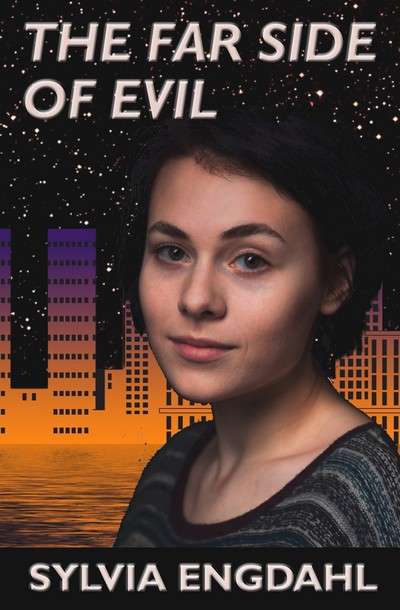
2018 edition
Especially when other readers may think it's better! Many older teens and
adults, especially those not attracted to fantasy, prefer
The Far Side of
Evil to
Enchantress. So the other reason I keep saying it's for
older readers is that teenagers often avoid books that are thought suitable
for younger kids. Not nearly as many teens have read it as might have done
so if it hadn't been called a sequel.
Why didn't you let the characters in The Far Side of Evil find
the key to the Critical Stage, the factor that causes some civilizations
to destroy their worlds instead of expanding into space?
I've been asked this since friends first read the book before it was
published, and my answer has always been the same: If I knew the key, I'd
tell the President of the United States instead of putting it in a novel!
(Recently, however, I've has some new ideas about the key, which are discussed in
my essay
Update on the Critical Stage.)
Does that mean you think the Critical Stage is real?
Why does anyone doubt it? I first developed the theory of the Critical
Stage in 1956, before the people of planet Earth had any space programs.
Then, as throughout most of the years since, the threat of nuclear war was
of great concern. It seemed to me that if we didn't turn our attention to
space soon, we would very likely destroy ourselves. One of the most
encouraging events I've ever witnessed took place just a year later, when
Sputnik was launched into orbit, making it impossible for the setting of
my story to be Earth. This does not mean, however, that the planet in the
story is simply our world under another name, because I believe what I wrote,
that the Critical Stage is a natural one that all inhabited worlds go
through.
The Far Side of Evil was first published in 1971, during the era
of the Apollo moon landings. At that time, I believed Earth was safely out
of the Critical Stage. It didn't occur to me that a planetary civilization
might cut back its thrust into space once it had gotten started. But that,
unfortunately, has been the case with ours. The delays and cutbacks in
Earth's space programs have been very alarming to me. (For more of what I think
about the Critical Stage, see
Space and
Human Survival and other essays at this website--including the
more recent
Thoughts on the 50th
Anniversary of the First Moon Landing, in which I express a more
optimistic view of the hiatus in space travel.)
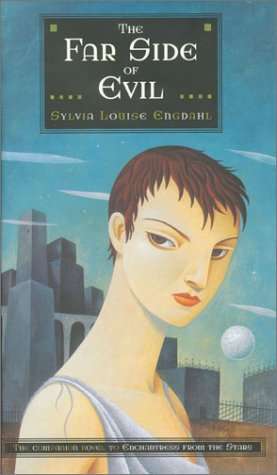
Walker edition (2003)
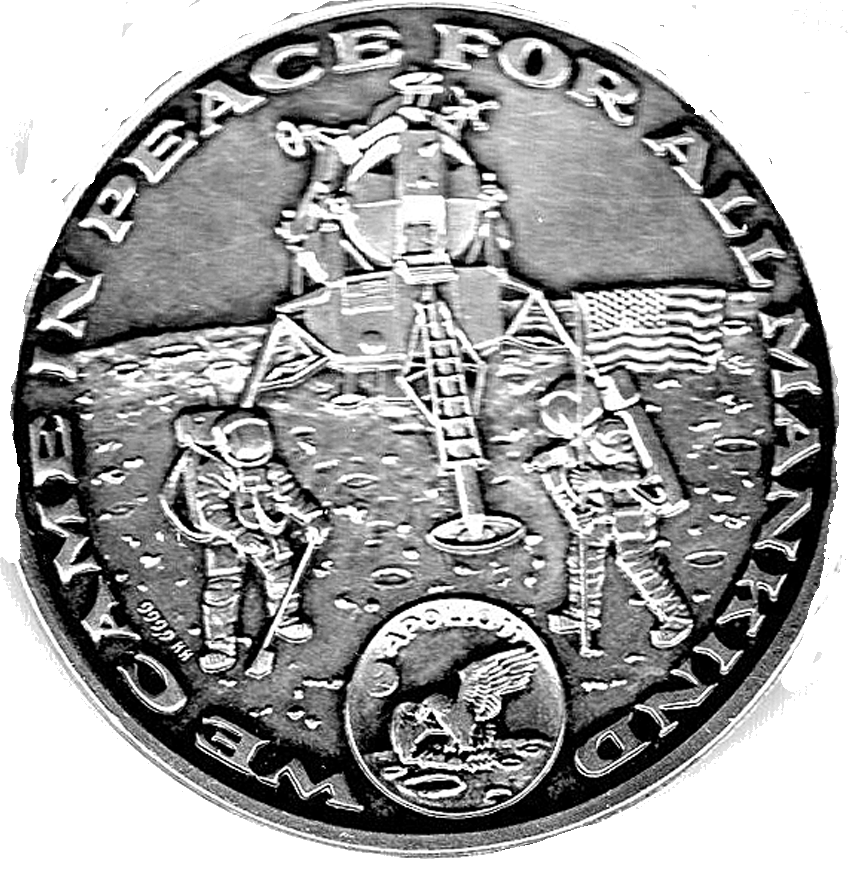
In the early 70s, when many people wore Peace Symbols as pendants,
I went around wearing a Moon Landing medallion (one of many in a
collection I then had) because I truly believed that putting humanity's
energy into exploration and settlement of new worlds in space was the
only way to bring about lasting world peace. I still believe this! I
still believe that "We came in peace for all mankind" meant more than just
having peaceful intentions toward our competitors in the Space Race of the
60s. Although our world today is no longer so much like the world in
the story, there is peril as long as many nations, and many kinds of
troublemakers, are competing for the resources of one small planet.
Yet we still have wars even though we have space travel; doesn't
that invalidate the premise of the story?
No, because our civilization hasn't made a lasting commitment to a major
space effort. We are not established in space in any significant sense--we
have simply made some brief trips there and performed some scientific
investigation, and then failed to pursue more than a fraction of the space
undertakings of which our technology is capable. We've abandoned the moon.
We've built no orbiting colonies or even large-scale industrial facilities
in space. We've turned our backs on human exploration of Mars. As a
species, despite the dedication and enthusiasm of an all-too-small minority
of individuals, we are no more committed to expansion into space than we
were before we had launched a single spaceship. And so there's as yet no
evidence one way or the other as to whether the story's premise is true or
not.
 Isn't the novel more about Earth's political conflicts than
about space?
Isn't the novel more about Earth's political conflicts than
about space?
Absolutely not. Some readers thought I used space fiction as a vehicle
for political commentary, whereas in fact I used political melodrama to
dramatize ideas about the importance of space. Beyond the obvious and
uncontroversial premise that dictatorship is a bad thing and totalitarian
rulers are motivated by desire for power, the story's main reference to
Earth's affairs concerned the youth activism of the late 60s--some of which
struck me as comparable to Randil's well-meant but disastrous attempt to
change the world overnight. This, however, was a side issue compared to my
conviction that expansion into space is the only way of eliminating war
on Earth.
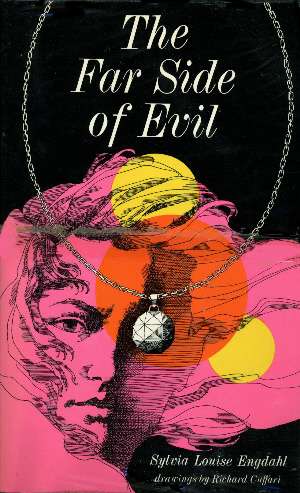
Atheneum edition (1971)
Then are you sorry you portrayed a political situation that makes
some people consider the book outdated?
That's not what dated the original edition. The planet in
the story is comparable to Earth of the 50s, not the 70s; at the time of its
publication it wasn't meant to be a portrayal of current conflicts.
But the Critical Stage has turned out to last longer than the book suggested;
my assumption that the invention of space technology will cause a
civilization to immediately put its energy into a space effort has indeed
turned out to be invalid.
Furthermore, the Critical Stage has proved to be much more complex than
I imagined when I assumed it was merely a brief stage in our planet's
history. We now see that nuclear war is not the only danger; we face other
threats such as terrorism, biological weapons, destruction of the
environment, and depletion of our natural resources--to name only a few of
the problems that will eventually confront any civilization confined to a
single world. Some people think these disasters can be avoided by effort on
our part. I do not. I believe they are the natural consequences of our
species being ready to expand into a new and larger ecological niche. In
my opinion, the only way we can save Earth is to take up that challenge.
Isn't this too unconventional an opinion to be taken seriously?
Though I can't deny that it's a minority opinion, I am far from alone
in holding it. On my
Space
Quotes to Ponder page I have posted quotations from dozens of
people, including some very well-known people, who believe expansion into
space is essential to the survival and/or future welfare of our species.
Furthermore, in 2017 I added several quotations that specifically state the
importance of space to elimnation of war as epigraphs to the ebook and
current paperback editions of
The Far Side of Evil
Why do you now tell people not to read the original edition of
The Far Side of Evil?
Because the 2003 and later editions contain revisions to the story's
statements about the Critical Stage that have a major impact on their timeliness.
If you haven't already read the old edition, I urge you not to read an
old copy, because recent history has invalidated some of the wording I
used in 1971. I don't want the book to be less convincing than it
would be if read in its updated form, which makes plain that it's the
ongoing colonization of space, not merely the invention of space travel,
that's crucial to survival.
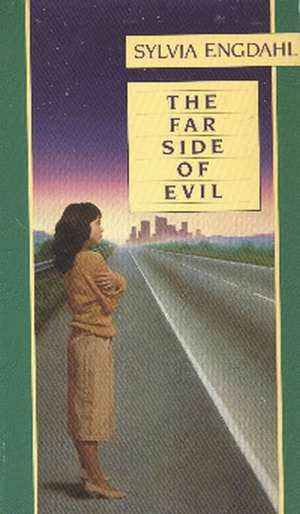
Collier editiion (1989)
But in Enchantress from the Stars, colonization is shown
as wrong.
Only because the Empire in that story colonized
inhabited planets,
which as I've said in the FAQ for
Enchantress, I don't believe would really happen.
Once, the idea that spacefarers might colonize inhabited planets was plausible because
of past history, but we have progressed; even today, no one in charge of space policy
would consider doing such a thing, so more advanced civilizations surely wouldn't.
That's one of the reasons I regret having connected the two books--
Enchantress
is based on both traditional and recent mythology, whereas
The Far Side of Evil
is meant to be taken more literally. (When Elana discusses colonization in the revised
edition, I wish she could say that civilizations advanced enough to build starships never
colonize inhabited planets; but she can't because of her involvement in a story
where it happened.)
Incidentally, I disagree strongly with the view held by some people that the term
"colonization" should not be used in connection with space because of its negative
political connotations. This objection strikes me as invalid and in fact ironic. On Earth colonization
involved taking over the land and/or culture of indigenous inhabitants--but that is precisely what
a space colony would not do! Nobody, to the best of my knowledge, advocates colonizing
inhabited planets, even if we should ever find any. The idea of expanding into space is to
abandon our dependence on zero-sum games and thus avoid any more takeovers. A more
accurate precedent for the term "colonize" in the space context is its meaning in biology: the
establishment of a species' presence in a new ecological niche.
Did you change anything in the 2003 edition besides
the discussion of the Critical Stage?
The action of the story hasn't been changed in any way. I removed
non-inclusive (sexist) language, and made many other improvements to
wording--some I'd long wanted to make and others suggested by my new
editor. It is now a better book as well as a more timely one for today's
readers.
For more information about the updating, read the
Afterword to the 2003 Edition
Why isn't the 2003 edition labeled "revised" on the book itself
or in catalogs?
The Library of Congress doesn't consider an edition "revised" unless
20% of it has been altered. I didn't change
that much! In my
opinion, the wording changes, though minor in terms of length, were of
major enough significance to announce, so that people who read the
old edition or were considering buying used copies, would realize that the newer
one was worth getting. (By now, of course, this isn't a problem since few copies
of the 1971 edition still exist.) But Walker chose not to say anything about updating in
their publicity, so it's mentioned only in the new Afterword and on the
jacket flap.
>
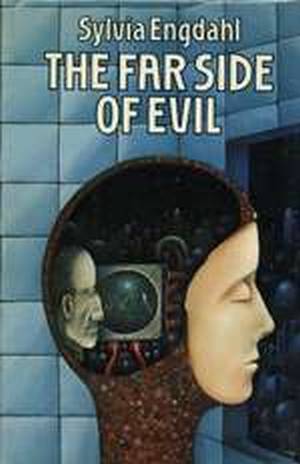
British editiion (1975)
No. The text of the current edition is the same as the 2003 and 2005 editions
and the 2011 ebook (except for a few very minor changes to mentions of the Service
that I made for consistency with my more recent Captain of
Estel trilogy).
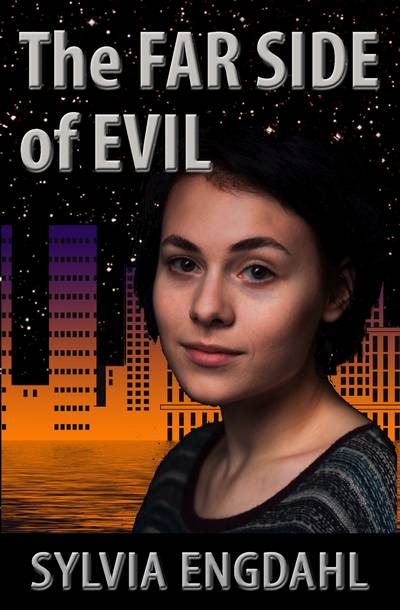
This is the first time I personally, as distinguished
from a publisher's artist, have ventured to portray Elana. In the two books about her I
carefully avoided saying what she looked like, since the question of whether she's
descended from people of Earth is meant to be an open one. But most of the other editions'
covers have shown her in one way or another, so I decided to offer my own visualization,
and I have chosen a cover picture that suggests she is of mixed Terrestrial race. (For more about this, see the FAQ for
Enchantress from the Stars.) Of course,
in this book she is older and in a darker situation than than in
Enchantress from the
Stars, so she looks different from what readers of that book may have imagined.
What do you think the changes in our world since September 11,
2001, mean in terms of our own Critical Stage?
Several people wrote to ask me this. I'm sorry to say I think the
growing problem of international terrorism is exactly what can be expected
in a Critical Stage civilization: one that has outgrown its home world but
has not yet directed its energies into moving beyond, and in which the evil
actions of a few individuals can affect the entire planet. Yet in one way
this is a hopeful view; it reflects my belief that the threats we face are
not signs of something having gone wrong with our species' evolution, but
natural ones against which we must develop defenses, as we must against
other natural disasters. I believe we will win the war against organized
terrorist networks, just as we got through the crises of the second half of
the 20th century--all of which I remember personally. I don't think the
world is in any greater immediate danger than it has been since the 1950s,
although the American public now has a new awareness of peril. But
time is running out (again, see my
Space and Human Survival page). To let the current situation
distract us from developing space technology would, in my opinion, be
self-defeating.
Added November 2, 2006: Recently, my view of this issue has changed
somewhat. I now feel that the world will soon be in greater danger from
terrorists than in the past because they will have access to emerging new
technologies such as biotechnology and nanotechnology, with which they could
do great harm. These technologies offer many benefits to humankind and I am
certainly not opposed to them, but they could be used destructively by small
numbers of people. Therefore, it's important that defenses against them be
developed before they are made available, and it's more imperative than ever
that a space colony be established as insurance against disaster.
For more of my opinions about space, be sure to visit the Space section
of this website (click the Space tab at the top of this page). Most of the material
there is also in my ebook From This Green Earth: Essays on Looking Outward,
which is availalble in ebook, paperback. and audiobook editions,